Quick Answer
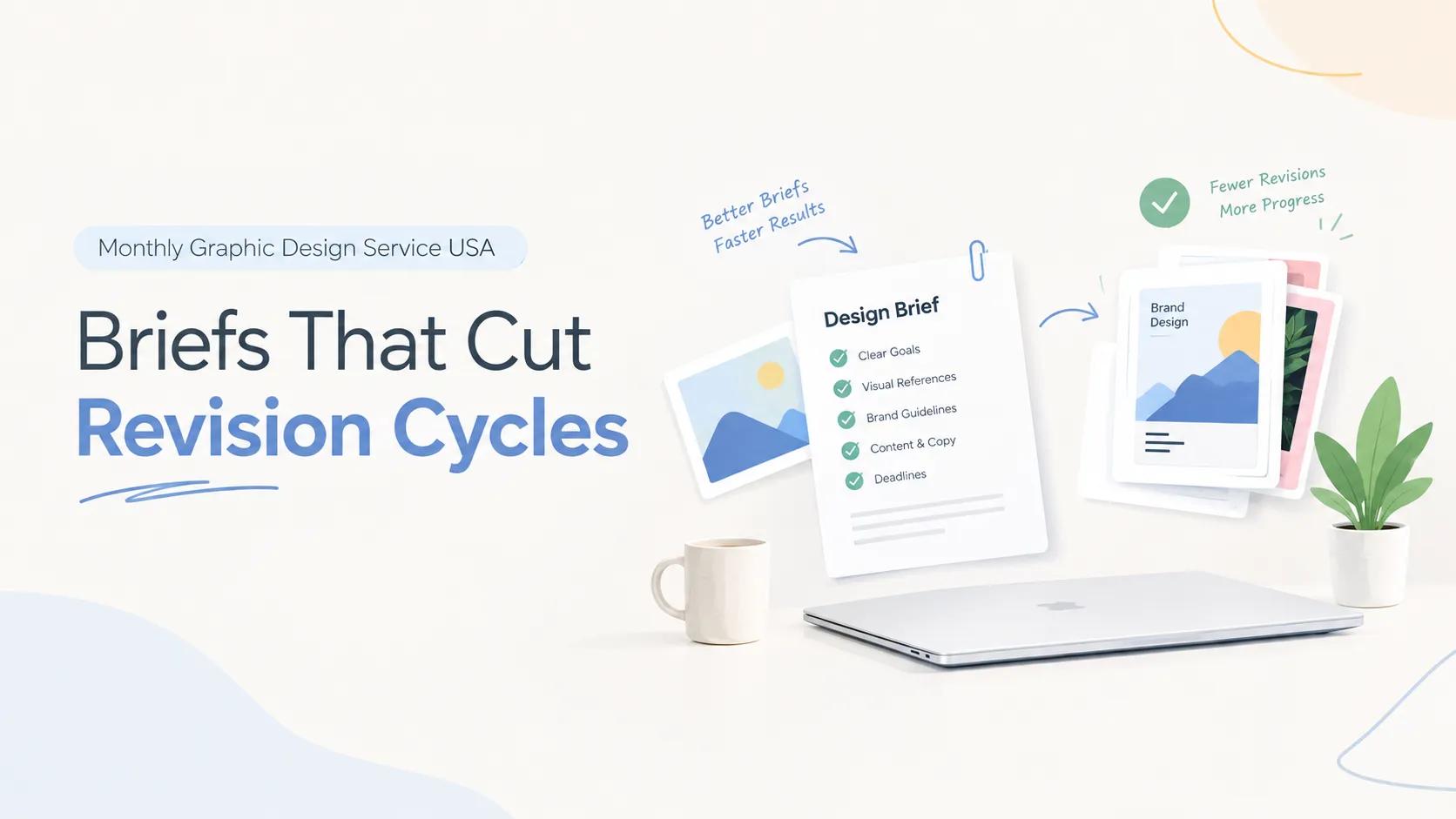
A creative brief assists the Monthly Graphic Design Service reduce revision times by providing designers with the necessary information before work starts. US teams must define the goal of the business, the intended audience format, the design style approval of copy, brand guidelines, visual references, deadlines and final approval in one location. With unlimited design access, concise briefs help keep the queues moving since designers are spending less time addressing basic questions or re-building work. For instance the marketing team that is requesting a sales deck could present the target audience content, approved content and brand templates, as well as most popular examples and the delivery form before the design process begins and feedback becomes faster, more clear and easy to take action on.
Why Better Briefs Reduce Revisions
Revisions are not uncommon, however the reason for them is usually lacking information, rather than bad design. A well-designed idea can be ineffective if the brief doesn't have a clear audience, tone or even the ability to take action.
For a Monthly Graphic Design Service, unclear requests slow the queue. Repeated questions about copy, dimensions, brand files, or approvals shift time away from design. A better brief gives both sides the same definition of success.
Start With One Clear Goal
The first section of every brief should answer one question: what should this design achieve?
“Create a LinkedIn graphic” is a task. “Create a LinkedIn graphic that encourages US HR leaders to download our hiring guide” is a goal. The second version guides hierarchy, tone, message, and action.
When using an unlimited design subscription, give each request one primary objective. Avoid asking one asset to educate, sell, explain several features, build awareness, and promote an event at once. Focus reduces conflicting feedback.
Define the Audience
Design changes depending on who will see it. An enterprise presentation should not look like a college-focused social campaign. Tell the designer who the audience is, what they know, what problem they have, and what action you want.
A Monthly Graphic Design Service becomes more efficient when audience information stays consistent. Create a short audience sheet for your main customer groups and attach the right profile to each request.
Approve Copy Before Design
Changing copy after a layout is built can create avoidable revisions. A short headline may fit perfectly, while a longer replacement can change spacing, hierarchy, image placement, and page count.
Whenever possible, approve the copy first and mark anything temporary. For presentations, separate slide content from design notes. For an Unlimited design subscription, this protects queue capacity because the team spends time refining design instead of rebuilding layouts around new content.
Share Brand Rules and References
Every request should link to current logos, colors, fonts, image styles, templates, and brand guidelines. Do not assume the designer knows which older campaign is still approved.
A Monthly Graphic Design Service becomes more consistent when approved examples live in one shared inspiration folder.
Specify Deliverables Up Front
State the exact deliverable before work starts. Include dimensions, orientation, platform, file format, number of versions, and whether editable source files are needed. This helps a Monthly Graphic Design Service estimate effort and prevents late technical changes.
Use One Feedback Process
Too many reviewers can create more revisions than too little feedback. One manager may ask for minimal layouts while another asks for more detail.
Choose one person to consolidate comments and one person to approve final work. Explain the reason behind major changes. “Increase contrast because the key number is hard to read on mobile” is more useful than “make it pop.”
An unlimited design subscription works best when feedback stays in one channel instead of being scattered across email, chat, documents, and meetings.
A Simple Brief Template
A useful brief can be short. Include the project name, objective, audience, deliverable, approved copy, brand links, references, mandatory elements, things to avoid, deadline, and approver.
Free tools make briefing easier. Google Docs works for reusable templates and approved copy. Google Drive organizes brand files. Figma supports visual references and collaborative comments. Canva can help non-designers show rough layout ideas. Trello or a spreadsheet can help teams prioritize work before sending requests to a Monthly Graphic Design Service.
Case Study: A Better Sales Deck Brief
Consider a fictional US SaaS company preparing a 15-slide sales deck. Its first request says, “Make this deck modern and premium.” The designer creates a clean direction, but sales leaders later request new messaging, proof points, product screenshots, and a stronger enterprise tone. Several rounds follow because key decisions were made after design started. For the next deck, the marketing manager prepares a structured brief with the audience, sales objective, final copy, approved proof, brand template, three reference slides, required screenshots, and one approver. Revisions still happen, but they focus on execution instead of changing the project foundation. That is the value of a strong brief: revisions become more useful.
About PitchWorx
PitchWorx is an overall design subscription services provider covering presentations, branding, marketing creatives, web, video and motion, print, publications, and illustration. Its Creative Assist workflow combines designer-led direction with AI-supported production, while experienced designers review and refine the final output.
PitchWorx says most first versions arrive within 72 hours, depending on scope, with two active requests at a time. The company also states that it has 13+ years of design experience and has supported 500+ brands.
Its expert and professional designer team can support businesses that need recurring creative work across departments. For companies considering an unlimited design subscription, strong briefs make the system more effective because clear inputs help designers move faster and keep brand execution consistent.
Conclusion
A Monthly Graphic Design Service cannot guess what a company means. The fastest route to fewer revisions is giving designers the decisions they need before work starts: purpose, audience, final copy, brand rules, references, technical specifications, deadline, and approval ownership.
The best brief is not the longest one. It is the one that removes uncertainty. When a company combines disciplined briefing with a Monthly Graphic Design Service workflow, designers can spend more time improving creative quality and less time resolving preventable questions.